Practical Manual · In Canada

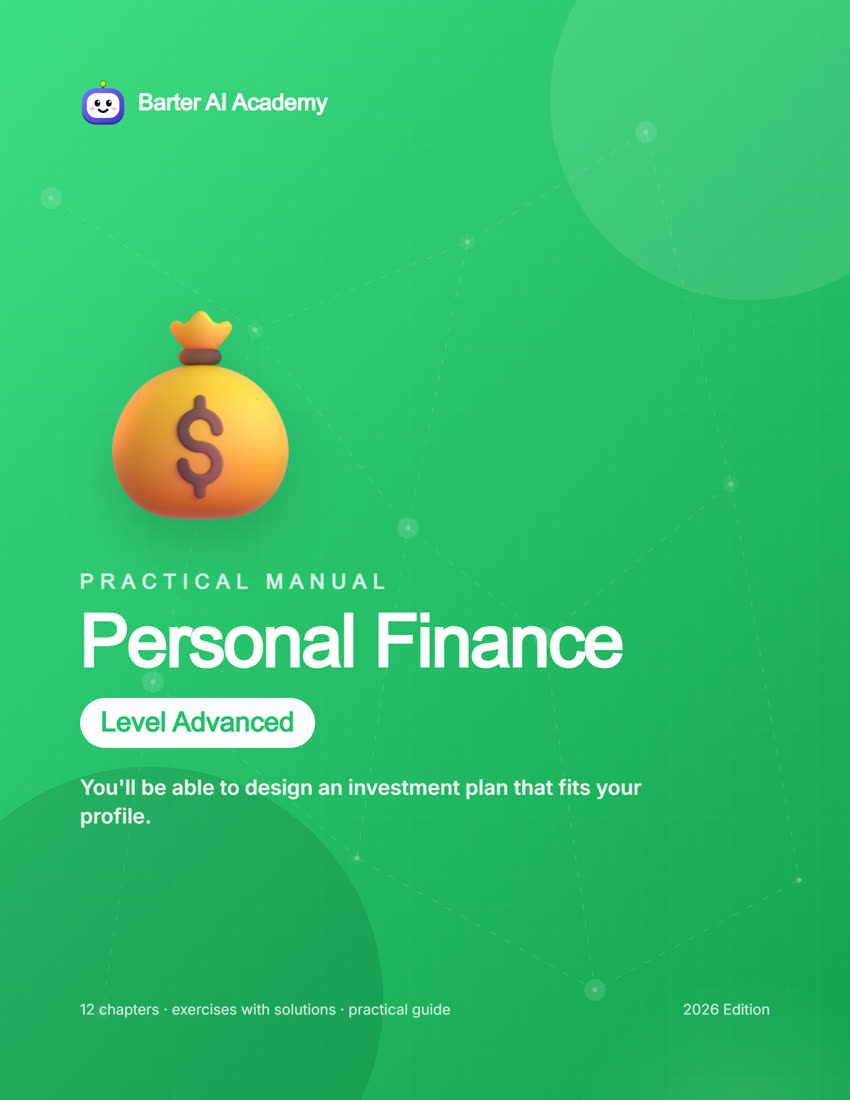
Personal Finance Manual in PDF (Advanced Level) to Study from Canada

If you are in Canada and want to learn personal finance at your own pace, this practical manual guides you chapter by chapter: learn how to invest with good judgment: risk, diversification, time horizons, and instruments.
Buy the manual · 7.99 USD

Personal Finance Manual · Advanced Level (PDF)

Everything is online: download it in seconds from Canada and pay in US dollars with PayPal or card.

Free sample

Chapter 8: High-Risk Assets

🎯 Recognize what high-risk assets are (cryptocurrencies, options, leverage, startups, commodities), evaluate how much risk to take on, and set rules to limit the damage.

They can multiply your money or drop it to zero. Here you'll learn to decide, using a method, how much to put at risk.

Key ideas

  • High risk means large price swings and the possibility of severe loss, in exchange for potential gains.
  • If $100 drops to $50, you need to gain $50 on $50, which is 100%.
  • Leverage amplifies both gains and losses.
  • Each asset carries different risks; knowing them is the first step.

What's inside

Part 1 · Basics

  1. 01What Is InvestingTell investing apart from saving and speculating, and apply a four-question checklist before putting money into any instrument.
  2. 02Risk, return, and time horizonYou'll be able to explain the relationship between risk, return, and time horizon, and use it to decide which type of investment fits each goal in your life.
  3. 03Inflation and Purchasing PowerCalculate how much purchasing power your money loses to inflation and tell apart nominal return from real return.
  4. 04Your Investor ProfileIdentify your investor profile by combining your risk tolerance, your ability to take on risk, and your time horizon, and use it to decide which types of investments to explore.

Part 2 · Instruments

  1. 05Deposits and Fixed IncomeYou will be able to explain how time deposits and bonds work, calculate their real return with the exact formula, understand why a bond's price changes when rates move, and decide when they fit your profile and your goals.
  2. 06Stocks and Index FundsExplain what a stock is and what an index fund is, and decide when each one makes sense based on time horizon, costs, and diversification.
  3. 07Real EstateEvaluate a real estate investment with real numbers: net return, hidden costs, liquidity, and concentration risk, and compare it with other options.
  4. 08High-Risk AssetsRecognize what high-risk assets are (cryptocurrencies, options, leverage, startups, commodities), evaluate how much risk to take on, and set rules to limit the damage.

Part 3 · Strategy

  1. 09DiversificationYou'll be able to explain what diversifying means, tell a truly diversified portfolio apart from one that only looks diversified, and build a sample allocation based on your goal and time horizon.
  2. 10Periodic ContributionsDesign a periodic contribution plan (dollar-cost averaging) with an amount, a frequency, and automation, while understanding its advantages and its limits.
  3. 11Emotional Mistakes When InvestingRecognize the most common emotional biases in investing (panic, euphoria, FOMO, loss aversion, and overconfidence) and write rules that keep you from acting on impulse.
  4. 12Review and RebalanceYou’ll be able to review your portfolio on a clear schedule, calculate how far it has drifted from your target allocation, and rebalance using simple rules, without deciding based on emotion.

Buy the manual · 7.99 USD

Practice it for free in the app

This manual has an interactive version in Barter AI Academy: lessons with challenges, an AI tutor that answers you 24/7, and a certificate. The first 5 Personal Finance lessons are free.

Start for free →

Other cities in Canada

Other levels in your country

See all manuals →