Books › You Are the Machine › Chapter 20
📘 You Are the Machine · Chapter 20 of 32
The Psychology of Desire
Reading from Singapore? Here is chapter 20 of "You Are the Machine" explained: the key ideas, one complete section and the challenge Yurian Barter gives at the end.
How many things did you buy last month that you didn't really need?
Think about it. Maybe a watch, clothes, a subscription, a course, a coffee. And now the big question: was it you who made that decision… or did someone influence it without you noticing?
In this chapter we're going to step into territory few explore in depth: the customer's mind. And by the end, you won't just buy more wisely. You'll also sell much better.
What this chapter covers
- First We Feel, Then We Think
- Selling Isn't Convincing: It's Attracting
- The Principles That Move the Mind
- Fear, Urgency, and Persuasion, Used Well
- The Secret That Changed How I Sell
- The chapter challenge
The Principles That Move the Mind
The Halo Effect: Invisible Authority
Attraction begins before you open your mouth. The brain forms an opinion about you in seconds.
If your business has a mediocre website, neglected social media, or a shop that doesn't convey care, you've already lost part of the sale. When your image is impeccable, the customer assumes your product is, too. That's the halo effect.
That's why we insist so much at the academy: your digital presence has to live up to what you sell.
The Brain Fears Losing More Than It Likes Winning
People feel a loss more intensely than a gain of the same size. That's why messages like "last units," "enrollment until today," or "only five spots left" work.
But pay attention, and this is non-negotiable: they only work—and are only ethical—when they're true. Invented scarcity destroys your reputation the moment the customer finds out.
Real Scarcity
What's abundant gets ignored. What's scarce gets desired.
If you're always available, if you always have a discount, if you're always begging for a sale, you lose value and become a cheap commodity.
Don't present yourself as someone who needs the sale. You're the one with the solution. When your time is truly limited—small groups, a full calendar—say so. It isn't arrogance: it's knowing what you're worth.
Social Proof
Why, when you see a full restaurant, do you think it must be good? Why does a product with hundreds of reviews give you confidence?
Because the brain looks for references: if many people did it, it must be good. That's why real Google reviews, video testimonials, and customer cases are among the most valuable things you can have. Real. Always real.
Reciprocity
When you give a customer something without being asked—genuine advice, a free diagnosis, content that truly changes their day—the brain feels the natural urge to return the favor.
And the most powerful reciprocity is listening. As Dale Carnegie said: to be interesting, you have to be interested. If you remember your customer's name, if you understand their pain before offering the solution, you're no longer a salesperson: you're an ally. And you don't haggle over the price with allies.
Colors Communicate, Too
Nothing is placed at random. Red is usually associated with energy and urgency. Blue, with trust. Green, with well-being. Black, with elegance. White, with simplicity.
A color doesn't guarantee a sale, but it's part of how people perceive your brand.
Price Is Psychology, Too
Selling cheap doesn't always mean selling more. Price communicates. When something costs very little, some people get suspicious. When a higher price is backed by quality and results, it's perceived as a better investment.
Your Challenge for Today
- Halo audit. Look at your website, your social media, and your shop as if you were a customer seeing you for the first time. Do they convey the level of what you sell? Note three things to improve.
- Your real scarcity. What do you have that is truly limited? (spots, hours, units, calendar). Communicate it honestly.
- Three reviews. Today, ask three satisfied customers for a Google review.
- Rewrite one post by changing "we are" to "you get."
---
What's abundant gets ignored; what's scarce gets desired. But what's true gets recommended.
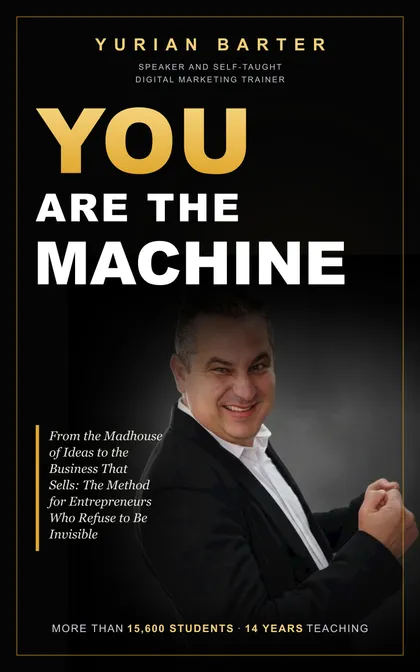
Read the whole book
"You Are the Machine" in PDF: 32 chapters, each with a challenge. $8.99, delivered to your email (charged in USD; your bank converts it to Singapore dollars).
Get the PDF · $8.99Or learn it free, with a certificate
Start the free Digital Marketing course in the Barter AI Academy app: short lessons, practice with an AI tutor and a certificate when you finish.
Start the free courseRelated guides in Singapore
All chapters of "You Are the Machine"
- You Are the Machine
- If You Lost Everything Tomorrow
- Nobody Is Coming to Save You
- The Silent Enemy
- Discipline: The Invisible Muscle
- The Best-Paid Sharp Mind
- The Art of Starting Over
- Losing a Partner in Crime
- The Fear of Rejection
- The Madman with New Ideas
- Three in the Morning
- An Idea Is Not a Business
- Build a System, Not a Burden
- You Are the Business
- A Business That's Impossible to Copy
- Vision vs. Survival
- How Much Does Each Customer Cost You?
- The Lifeline: Referrals
- The Best Salespeople Don't Sell
- The Psychology of Desire
- Make Your Customer Sell Themselves
- Stop Being Just an Option
- Closing on WhatsApp
- Fifteen Ways to Win a Customer's Heart
- Without Marketing, There's No Paradise
- The Invisible Business
- Ranking Wars
- Techniques Change; Concepts Don't
- Your Personal Brand
- The Fear of Speaking
- The Art of Presenting
- Those Who Didn't Give Up
← The Best Salespeople Don't SellMake Your Customer Sell Themselves →
More books by Yurian Barter
Edit Like a Director · Move the World · Mix Like a Producer · Ads That Sell · Google Finds You · Sell Without Pressure · Let Them Find You