Books › You Are the Machine › Chapter 21
📘 You Are the Machine · Chapter 21 of 32
Make Your Customer Sell Themselves
A practical summary of chapter 21 of "You Are the Machine" for entrepreneurs and creators in United States: what you will learn, an excerpt you can apply today and the closing challenge.
There's an enormous difference between selling and getting someone to want to buy.
The traditional salesperson chases. Writes, calls, insists, offers discounts, explains, writes again. And when the customer finally answers, they say: "I'll think about it."
But there's another way. One that merchants, leaders, negotiators, and even people in love have used for centuries. It doesn't involve forcing, manipulating, or pressuring.
It involves something much smarter: getting the other person to reach their own conclusion.
When you say "buy from me," the customer's brain answers: "Why should I?" But when you get them to think "this is exactly what I need," the conversation changes completely.
I call that self-buying.
What this chapter covers
- The Mistake Almost Every Salesperson Makes
- The Five Laws of Self-Buying
- The Formula of Millennia
- Urgency Isn't Pressure
- The Customer Who Sells Themselves
- Another Example: The Restaurant
- The chapter challenge
The Five Laws of Self-Buying
First Law: Don't Try to Convince
When someone feels you want to convince them, they raise a barrier. We all have a defense mechanism against pressure.
But if instead of "you have to buy this" you ask "What are you trying to achieve?", the conversation changes. Now the customer talks. And while they talk they're handing you information: what they want, what worries them, what they've tried, what failed them, and what they fear losing.
Second Law: Let the Customer Discover Themselves
Don't tell them what their problem is. Ask questions that let them discover it:
- What's happening right now?
- How long have you had this problem?
- What have you tried so far?
- What result were you expecting?
- What's keeping you from getting it?
- What would happen if you stayed exactly the same for six months?
You're not telling them "you have a serious problem." You're giving them questions so they can assess it themselves. And a conclusion of their own is worth more than ten minutes of explanation.
Third Law: Don't Sell the Product; Sell the Distance
Every customer is somewhere and wants to get somewhere else.
Find out where they are, where they want to be, and what's keeping them from getting there. And then present your solution as a bridge, not as a list of features.
Don't say "my service includes five sessions." Say: "These five sessions are designed to take you from where you are today to the result you're looking for."
One sentence describes the product. The other describes the transformation.
Fourth Law: The Customer Has to See Themselves with the Result
People don't buy only what exists. Many times they buy what they imagine could exist.
Ask them: "If we solved this, what would change in your business?" And listen. Because now the customer is describing their own future.
But careful: don't promise results you can't guarantee. Don't invent. Don't exaggerate. Imagination has to rest on a real proposal.
Fifth Law: The Decision Has to Feel Like Theirs
This is the heart of the formula.
You can present, explain, demonstrate, compare, and answer objections. But in the end the decision belongs to the customer.
That's why one of the most powerful questions isn't "Are you going to buy?", but:
"After everything we've talked about, what do you think would be best for you?"
Now the customer evaluates. And if your proposal truly fits their problem, they can reach the conclusion on their own: "I think this is what I need."
When they say it, it's no longer you trying to sell. It's them putting their own decision into words.
Your Challenge for Today
- Your bridge. Write in one line your customer's typical current state and in another their desired state. Your product is what sits between the two.
- Your question script. Adapt the six questions from the second law to your business.
- Rehearse. Practice the conversation with a friend playing the customer. Record it and listen: who talked more?
---
People defend the decisions they make and abandon the ones imposed on them. Don't sell: help them decide.
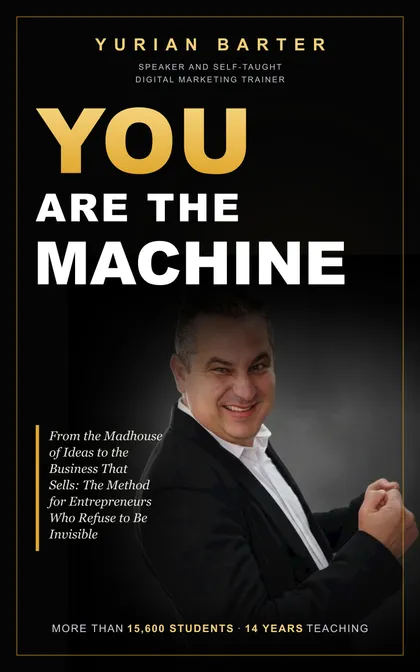
Read the whole book
"You Are the Machine" in PDF: 32 chapters, each with a challenge. $8.99, delivered to your email.
Get the PDF · $8.99Or learn it free, with a certificate
Start the free Digital Marketing course in the Barter AI Academy app: short lessons, practice with an AI tutor and a certificate when you finish.
Start the free courseRelated guides in United States
How to Sell on WhatsApp · Psychology of Selling
All chapters of "You Are the Machine"
- You Are the Machine
- If You Lost Everything Tomorrow
- Nobody Is Coming to Save You
- The Silent Enemy
- Discipline: The Invisible Muscle
- The Best-Paid Sharp Mind
- The Art of Starting Over
- Losing a Partner in Crime
- The Fear of Rejection
- The Madman with New Ideas
- Three in the Morning
- An Idea Is Not a Business
- Build a System, Not a Burden
- You Are the Business
- A Business That's Impossible to Copy
- Vision vs. Survival
- How Much Does Each Customer Cost You?
- The Lifeline: Referrals
- The Best Salespeople Don't Sell
- The Psychology of Desire
- Make Your Customer Sell Themselves
- Stop Being Just an Option
- Closing on WhatsApp
- Fifteen Ways to Win a Customer's Heart
- Without Marketing, There's No Paradise
- The Invisible Business
- Ranking Wars
- Techniques Change; Concepts Don't
- Your Personal Brand
- The Fear of Speaking
- The Art of Presenting
- Those Who Didn't Give Up
More books by Yurian Barter
Edit Like a Director · Move the World · Mix Like a Producer · Ads That Sell · Google Finds You · Sell Without Pressure · Let Them Find You