Practical Manual · In South Africa

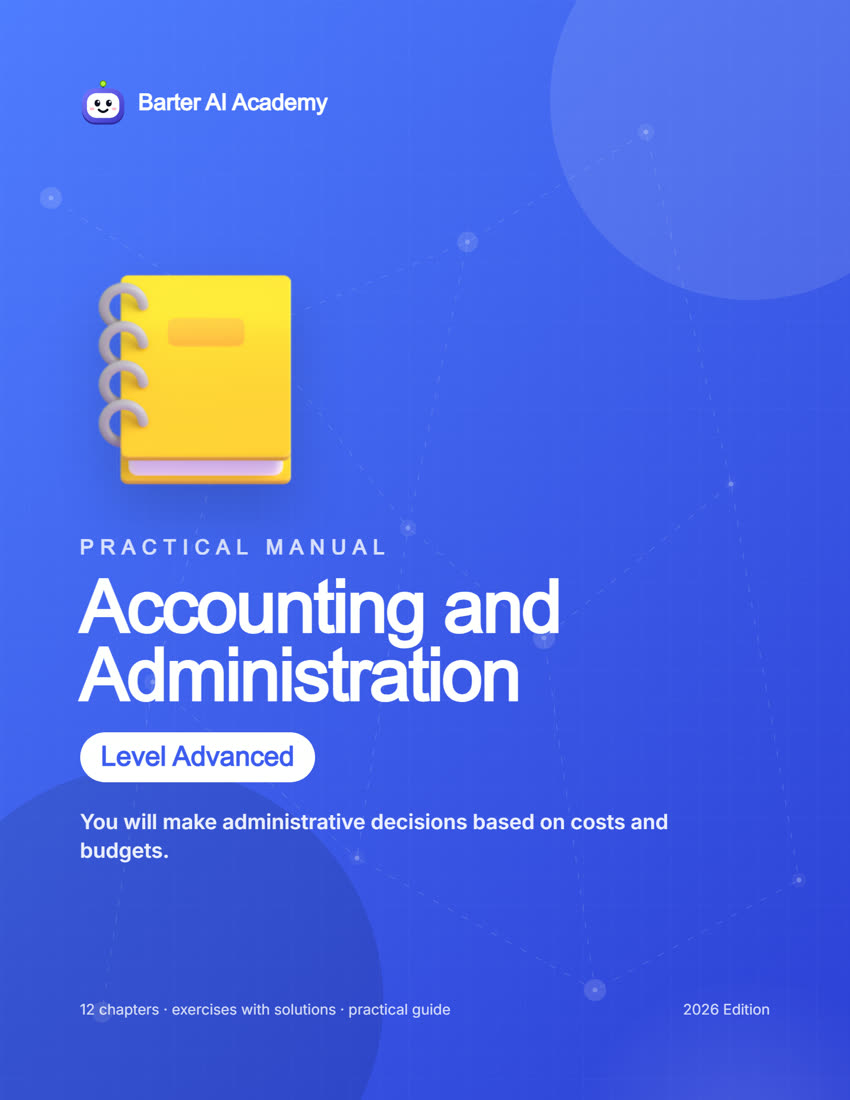
Accounting and Administration Manual in PDF (Advanced Level) to Study from South Africa

Learning accounting and administration from South Africa no longer depends on class schedules. With this PDF manual you move forward whenever you want, and by the end you will make administrative decisions based on costs and budgets.
Buy the manual · 7.99 USD

Accounting and Administration Manual · Advanced Level (PDF)

Everything is online: download it in seconds from South Africa and pay in US dollars with PayPal or card.

Free sample

Chapter 8: Key Financial Indicators

🎯 Calculate and interpret the key financial indicators of a business (gross margin, net margin, current ratio, receivables turnover, and working capital) to know whether it's doing well or needs adjustments.

Loose numbers don't tell you much. An indicator compares them and tells you whether the business is healthy.

Key ideas

  • Gross margin compares what remains after cost of goods sold with total sales.
  • If operating expenses are high, they consume the gross margin and leave little net income.
  • It's a subtraction: what you have available in the short term minus what you owe in the short term.
  • Each indicator answers a different question about the business.

What's inside

Part 1 · Costs

  1. 01Fixed and Variable CostsClassify a business's costs as fixed, variable, or mixed, and calculate how total cost changes when sales volume changes.
  2. 02Cost of a Product or ServiceCalculate the full unit cost of a product or service by adding materials, labor, and overhead, and use it to know how much it really costs to sell one unit.
  3. 03Break-Even PointCalculate the break-even point in units and in dollars, using fixed costs, price and variable cost, and interpret the margin of safety.
  4. 04Setting Prices with MarginCalculate a selling price from your cost and the margin you want to earn, and correctly distinguish between margin and markup.

Part 2 · Budgets

  1. 05Income and Expense BudgetBuild a monthly income and expense budget from realistic assumptions and use it to anticipate the month's result.
  2. 06Projected Cash FlowBuild a 3- to 6-month projected cash flow, identify the month when you run out of cash, and decide what to do to prevent it.
  3. 07Budget ControlCompare the budget with actual results, calculate variances, interpret them, and decide what actions to take on time.
  4. 08Key Financial IndicatorsCalculate and interpret the key financial indicators of a business (gross margin, net margin, current ratio, receivables turnover, and working capital) to know whether it's doing well or needs adjustments.

Part 3 · Administration

  1. 09Planning and Organizing a BusinessBuild a basic business plan with measurable goals, a structure of responsibilities, and a follow-up schedule based on your financial indicators.
  2. 10Processes and Internal ControlsDesign simple internal controls (segregation of duties, authorizations, reconciliations, and documentation) to protect the money and assets of a small business.
  3. 11Suppliers and PurchasingEvaluate and compare suppliers using criteria beyond price, calculate the true cost of a purchase, and apply a controlled purchasing process.
  4. 12Reports That Drive DecisionsDesign a one-page management report that turns business numbers into a concrete decision, with comparison, indicator, and recommendation.

Buy the manual · 7.99 USD

Practice it for free in the app

This manual has an interactive version in Barter AI Academy: lessons with challenges, an AI tutor that answers you 24/7, and a certificate. The first 5 Accounting and Administration lessons are free.

Start for free →

Other cities in South Africa

Other levels in your country

See all manuals →