Books › Edit Like a Director › Chapter 13
📘 Edit Like a Director · Chapter 13 of 17
Pacing: Calm or Euphoria
A practical summary of chapter 13 of "Edit Like a Director" for entrepreneurs and creators in Australia: what you will learn, an excerpt you can apply today and the closing challenge.
I'm going to ask you a question that will change the way you watch shows and movies:
Why do you feel calm in some scenes and adrenaline in others, when in both of them people are just talking and walking?
The answer is in the editing rhythm.
What this chapter covers
- Slow editing
- Fast editing
- An example to feel it
- Color and emotions
- Sound
- An audio mistake that ruins videos
- The chapter challenge
Sound
Don't forget the audio. A good edit sounds good: fitting music, ambient sound that gives context, effects that underline what matters. Many times the viewer doesn't notice the sound… but they feel it.
Your challenge
Shoot a simple scene, for example, someone arriving at a house. Edit it twice: one slow (long shots, calm music) and one fast (short cuts, energetic music). Next to each version, write down what it should convey. Show it to someone and ask what they felt.
Pacing is the emotional language of editing: slow to calm, fast to alert.
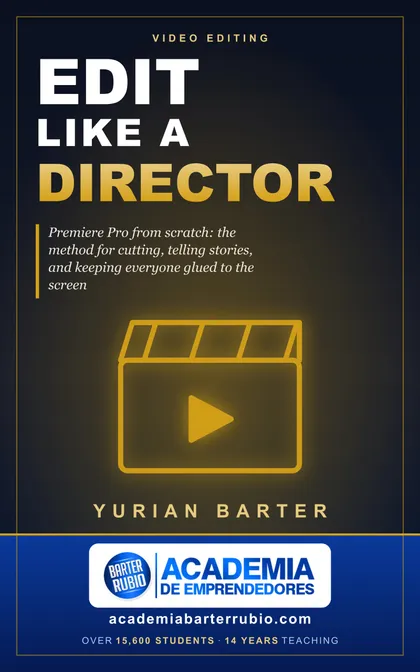
Read the whole book
"Edit Like a Director" in PDF: 17 chapters, each with a challenge. $8.99, delivered to your email (charged in USD; your bank converts it to Australian dollars).
Get the PDF · $8.99Or learn it free, with a certificate
Start the free Video Editing and Content Creation course in the Barter AI Academy app: short lessons, practice with an AI tutor and a certificate when you finish.
Start the free courseSee the free Video Editing and Content Creation course in Australia →
Related guides in Australia
Pacing in Video Editing · How to Write a Video Script · Sound Design for Video · Film Editing Techniques
All chapters of "Edit Like a Director"
- A Video Is a Very Well-Told Lie
- Editing Is Not the Same as Assembling
- Shots: The Editor's Alphabet
- Where the Camera Looks From
- Compose Before You Cut
- Open Premiere Without Fear
- In Points, Out Points, and Markers: Don't Drag Everything In
- The Timeline and Its Tracks
- The Tools and Shortcuts That Make You Fast
- The Experiment That Proves Your Brain Edits
- Linear Editing and Continuity
- The Imaginary Axis and Parallel Editing
- Pacing: Calm or Euphoria
- Animate Your Video: Keyframes in Premiere
- The Technical Script: Write Before You Cut
- Clean Audio: Clarity and Stability
- Sound Design: What You Don't See, You Feel
← The Imaginary Axis and Parallel EditingAnimate Your Video: Keyframes in Premiere →
More books by Yurian Barter
You Are the Machine · Move the World · Mix Like a Producer · Ads That Sell · Google Finds You · Sell Without Pressure · Let Them Find You